

Baked Apple Pie: The Cozy Homemade Dessert Inspired by McDonald’s Apple Pie
There are desserts that announce themselves with candles and fancy plates, and then there is Baked Apple Pie, the sort of dessert that quietly makes a kitchen feel like home. You smell cinnamon before you see the pie.
Someone walks past the oven pretending not to be interested, then somehow returns five minutes later.
And when the crust finally turns golden, well, the whole house seems to have an opinion about when it should be eaten.
My first real appreciation for an apple pie came from that particular contrast: crisp pastry outside, soft apples inside, and enough warmth in the filling to make an ordinary afternoon feel slightly special.
The famous McDonald’s Apple Pie taps into much the same comfort. McDonald’s describes its U.S. Baked Apple Pie as being made with American-grown apples, a lattice crust and sprinkled sugar, with 230 calories listed on its current U.S. product page.
But making your own at home is a different little adventure. You are not trying to copy every commercial detail.
You are chasing the feeling the flaky pastry, the sweet-tart apple filling, the smell of fruit and spice, and that first bite when the crust makes a tiny crackle.
It doesnt need to be perfect, actually. A homemade pie with one crooked corner can be more memorable than a perfectly symmetrical one.
Why Baked Apple Pie Still Feels Like Comfort Food
Apple pie has an almost unfair advantage: its ingredients are familiar. Apples, flour, butter, sugar and spices do not sound dramatic on paper. Yet put them together with heat and patience, and something rather lovely happens.
The apple filling softens while retaining some texture. Sugar draws out the fruit’s juices. Cinnamon gives the filling its recognizable warmth, while a small amount of lemon juice keeps the sweetness from becoming flat. Then the pastry comes along and says, quite confidently, yes, this needed butter.
That is part of why a baked apple pie works across generations. It can be a Sunday dessert, a holiday treat, an after-school surprise, or something you make because three apples were sitting on the counter looking increasingly worried.
The McDonald’s version is much smaller and designed for convenience, but the basic pleasure is easy to understand.
The official McDonald’s description emphasizes real apples, lattice pastry and a baked finish.
McDonald’s also confirms that its apple pie contains real diced apples, with the exact apple variety able to vary by season.
The Ingredients That Make the Difference
A good homemade Apple Pie does not require a frighteningly long ingredient list. In fact, keeping it simple gives you more control over the final flavor.
For a medium homemade pie, gather:
- 5–6 medium apples, preferably a mixture of sweet and tart varieties
- 2 tablespoons lemon juice
- ½ cup granulated sugar
- ¼ cup brown sugar
- 1½ teaspoons ground cinnamon
- ¼ teaspoon ground nutmeg
- 1 tablespoon cornstarch or flour
- 1 teaspoon vanilla extract
- A small pinch of salt
- 2 portions of homemade or prepared pie pastry
- 1 tablespoon butter for the filling
- 1 egg for an optional egg wash
- 1 tablespoon coarse or granulated sugar for sprinkling
For apples, mixing varieties is one of those tricks that sounds unnecessary until you try it. A firmer, tart apple can provide structure while a sweeter apple melts into the filling.
McDonald’s says it looks for apples that are sweet and slightly tart, which is a useful flavor principle for a homemade version too.
The pastry matters just as much as the apples. If the crust is too thick, the filling feels trapped. If it is paper-thin, the juices can make it fragile. Aim for a crust that is sturdy enough to hold the filling but delicate enough to break with a fork.
And please don’t forget salt. It is the quiet employee of the recipe, doing important work while nobody thanks it.
My Favorite Way to Prepare the Apple Filling
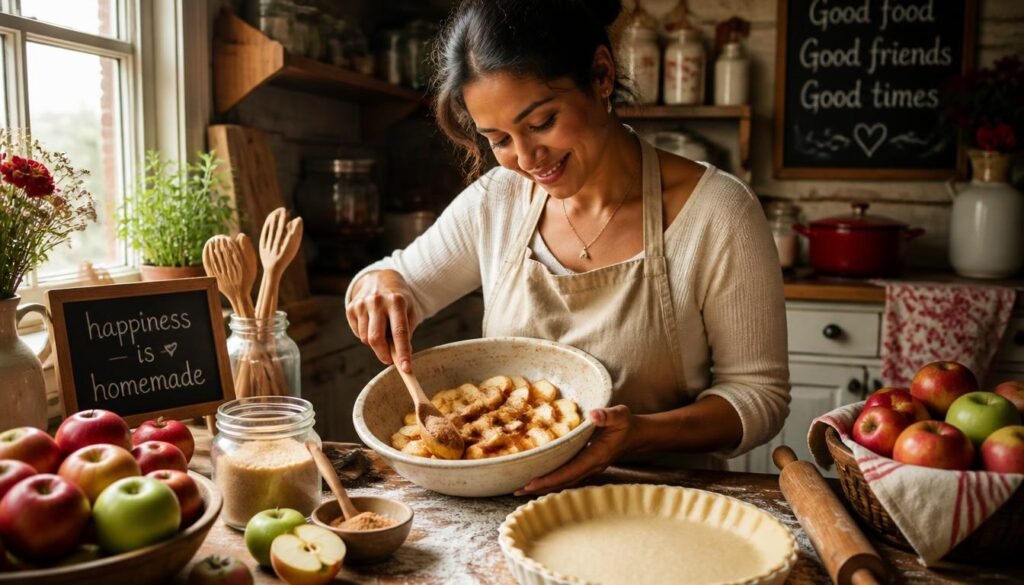
Start by peeling and coring the apples. Cut them into fairly thin slices, but don’t turn them into paper. You want enough body that the finished filling still feels like apples rather than apple-flavored jam.
Place the slices in a large bowl and toss them with lemon juice. Add the white sugar, brown sugar, cinnamon, nutmeg, salt and cornstarch. Mix gently until every slice looks lightly coated.
Let the apples rest for about 15 minutes.
This small pause is useful. The sugar begins drawing moisture from the fruit, giving you a preview of how juicy your filling will be.
Pouring every bit of that liquid directly into the pie can sometimes leave the bottom crust soggy, so use your judgement. A little juice is lovely; a swimming pool is not.
For an especially dependable filling, transfer the apples and their juices to a saucepan and cook them over medium heat for several minutes.
You are not trying to make applesauce. You simply want the fruit to begin softening and the liquid to become slightly syrupy.
Remove the pan from the heat and stir in vanilla and butter.
Now comes the difficult part: let it cool.
Yes, I know. The kitchen smells like cinnamon and cooked apples and suddenly patience has become a personal attack. Still, warm filling poured onto cold pastry can make the crust difficult to handle, so giving it time to cool is worth it.
Building a McDonald’s-Inspired Baked Apple Pie at Home
If you love the compact shape of a McDonald’s Baked Apple Pie, you don’t actually need to make one giant pie.
You can make individual hand pies.
Roll the pastry thinly and cut it into rectangles or small circles. Place a spoonful of cooled apple filling in the center, leaving a clean border around the edge. Brush the border lightly with water, fold the pastry over and press the edges together with a fork.
Then comes the fun part: ventilation.
Cut two or three small slits across the top. If you want that recognizable bakery-style appearance, add a few decorative pastry strips in a loose lattice pattern. Brush the surface with beaten egg and scatter a little sugar over the top.
The sugar is not merely decoration. As the pastry bakes, those tiny crystals add a pleasant sweetness and a faint crunch.
For larger traditional pie-making, place one pastry sheet into a pie dish, add the cooled filling, dot it with a little butter, then cover with the second sheet or create a lattice top. Crimp the edges firmly and cut vents into the center.
This is where homemade pie starts looking slightly chaotic, which is perfectly fine. The oven is about to perform its usual magic trick.
Baked Apple Pie: Getting the Crust Golden Instead of Sad
Preheat the oven to around 400°F (200°C) for hand pies, or 375°F (190°C) for a standard full-size pie.
Place the prepared pie on a baking sheet. This is one of those boring practical steps that becomes extremely exciting when filling bubbles over and you realize your baking sheet caught it instead of your oven floor.
Bake until the pastry is deeply golden and the filling is visibly bubbling. Small hand pies may take roughly 20–30 minutes, while a larger pie can need 45–60 minutes depending on its size and oven.
Don’t judge doneness only by the clock.
Look at the crust.
A pale crust is telling you it hasn’t finished becoming the dessert you imagined. You want a rich golden-brown surface, especially around the edges.
If the edges brown too quickly, cover them loosely with foil while the center continues baking. Let the finished pie cool before eating.
Although, realistically, someone will eat one too early.
That someone may be you.
The Little Details That Make Homemade Apple Pie Better
The difference between an okay pie and a memorable one often comes from details that take almost no extra effort.
First, don’t drown the apples in sugar. Apples already contain plenty of natural sweetness, and the pastry adds more.
A filling that tastes slightly sharper before baking can become beautifully balanced after the crust and sugar enter the picture.
Second, use cold pastry. Butter that stays relatively cold before baking creates little pockets in the dough. As the pie heats, that butter melts and contributes to the flaky texture.
Third, don’t overfill your hand pies. It is tempting to add one more spoonful because, well, there is clearly room. Then the filling escapes from the seam and your beautiful little pastry becomes an archaeological site.
Fourth, give the pie time to rest.
The filling thickens as it cools. If you cut a large pie immediately, the juices may rush outward. Waiting 30 minutes or longer can make the slices much cleaner.
And finally, taste the filling before baking when it is safe to do so. You can adjust cinnamon, sugar or lemon at that stage. Once the pie is in the oven, negotiation has ended.
How to Create an Apple Pie A-La-Mode Moment
One reason the McDonald’s dessert is easy to remember is that apple pie naturally loves cold vanilla ice cream.
McDonald’s itself suggests pairing its Baked Apple Pie with a Hot Caramel Sundae for an Apple Pie A-La-Mode style combination.
At home, you can take that idea in several directions.
Put a warm slice beside vanilla ice cream and let the edges of the ice cream begin to melt into the crust. Add a drizzle of caramel sauce if you’re feeling generous.
A little toasted pecan can bring crunch, although anyone with a nut allergy should obviously leave that one alone.
You can also serve individual baked hand pies with a scoop of vanilla ice cream on the side. It looks almost too simple, which is precisely why it works.
For something more indulgent, add warm caramel and a tiny pinch of flaky sea salt.
That is no longer just dessert. That’s dessert wearing a very confident jacket.
McDonald’s Apple Pie Nutrition: What the Number Actually Means
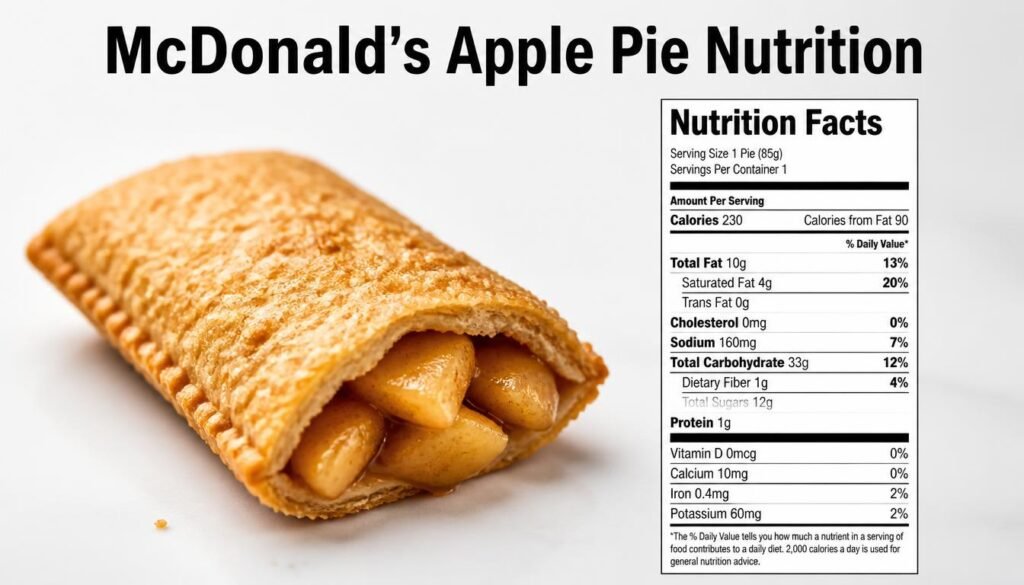
If you’re curious about McDonald’s apple pie calories, McDonald’s currently lists its U.S. Baked Apple Pie at 230 calories. Its nutrition information explains that calorie and nutrient
values are based on standard formulations and serving sizes, while variations can occur because of preparation, ingredients, regional differences and changes in product formulations.
So the 230-calorie figure is useful, but it should not be treated as a universal number for every apple pie everywhere.
A homemade version can vary dramatically depending on pastry thickness, butter, sugar, apple quantity and serving size.
If you’re tracking your intake, the most reliable approach is to calculate the recipe from the ingredients you actually use and divide it by the number of servings.
McDonald’s also provides a Nutrition Calculator and ingredient information for its menu items, which is a better place to check current product information than relying on an old screenshot or social-media post.
And there’s an important historical detail worth mentioning: some older McDonald’s nutrition pages state that information was correct as of January 2022.
Product formulations can change, so that date should not be mistaken for a guarantee about every current menu item or recipe.
Allergens and Dietary Needs Deserve More Than a Guess
Apple pie sounds harmless because apples sound harmless. The pastry is where things become more complicated.
For people managing food allergies, the ingredient list matters. McDonald’s provides information concerning common allergens and warns that normal restaurant operations
can involve shared cooking and preparation areas, equipment and utensils, creating the possibility of cross-contact.
The commonly referenced allergens include eggs, dairy, wheat, soy, peanuts, tree nuts, fish, shellfish and sesame in McDonald’s U.S. allergen information.
That doesn’t mean every apple pie contains all of these allergens. It means allergy decisions should be based on the current ingredient and allergen information for the specific product, restaurant and market.
For homemade pie, you have more control. You know whether your pastry contains butter, whether an egg wash was used, and whether your kitchen has handled nuts or other allergens.
Still, if someone has a serious allergy, don’t rely on assumptions such as “there’s only apples and flour.” Check every ingredient, avoid cross-contact, and seek professional dietary advice when needed. A dessert is never worth gambling with someone’s health.
A Few Common Baked Apple Pie Mistakes
The first mistake is using apples that become completely mushy. Soft apples aren’t automatically bad, but a mixture of textures usually produces a more interesting filling.
The second is adding too much liquid. Apples release plenty of moisture on their own, and excess juice can turn a beautiful bottom crust into something closer to pastry pudding.
The third is skipping the vent holes. Steam needs an escape route. Otherwise, the filling can bubble aggressively and push against the pastry.
Another common mistake is baking at an extremely high temperature because you want the crust browned quickly. The outside can darken while the filling remains undercooked.
And then there is the biggest mistake of all: cutting the pie immediately.
I have done this. Many people have done this. The pie doesn’t care about our impatience, unfortunately.
Give it a little time.
Making the Recipe Your Own
The beauty of a homemade Apple Pie is that you can move it away from the fast-food inspiration and toward your own kitchen personality.
Try adding a little grated orange zest for a brighter filling. Use cardamom with cinnamon for something warmer and more fragrant. Add raisins if that is your thing, although the raisin debate can become surprisingly intense at family gatherings.
For extra texture, stir a small handful of chopped walnuts or pecans into the filling—provided there are no relevant allergies.
You can also replace part of the white sugar with brown sugar for a deeper caramel note. A tiny amount of maple syrup can add another layer, though too much liquid may affect the filling.
For a more old-fashioned flavor, add a pinch of ground cloves.
For a simpler pie, skip all the experiments and let the apples speak for themselves.
That last option is underrated.
Baked Apple Pie for Different Occasions
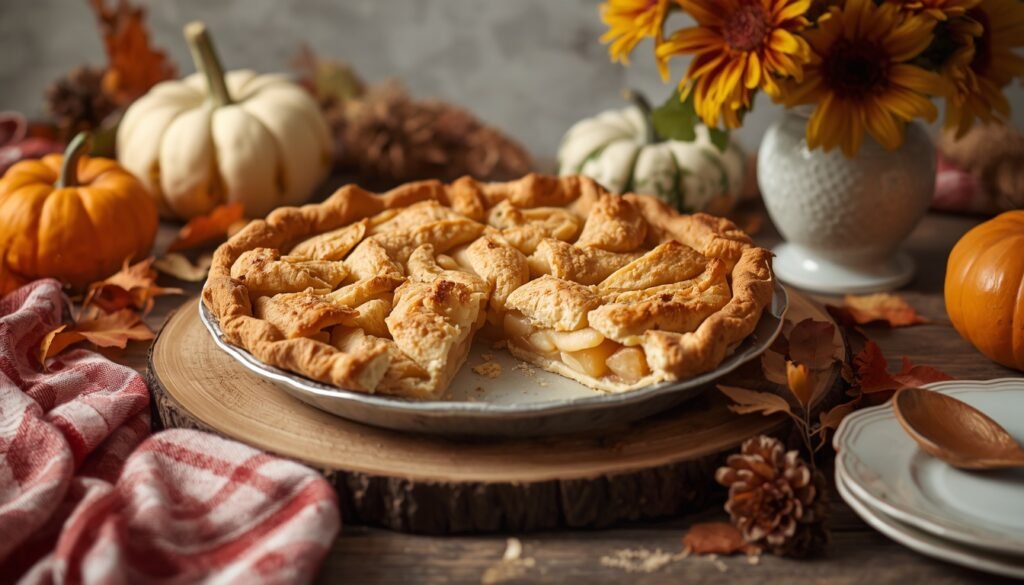
A large pie is perfect for family dinners because everyone can negotiate their slice size, which is a very polite way of saying people will stare at each other’s portions.
Hand pies are better for picnics, lunchboxes and casual gatherings. They travel more easily and don’t require plates or serving knives.
Mini pies work beautifully for parties. You can prepare several and let guests choose toppings such as vanilla ice cream, caramel sauce or whipped cream.
During autumn, serve the pie warm with cinnamon tea or coffee. Around the holidays, make decorative pastry leaves for the top.
For a birthday, tiny individual pies can replace a traditional cake if the guest of honor happens to be an apple enthusiast.
And for an ordinary Tuesday?
Make one anyway.
Dessert does not require a special occasion.
McDonald’s Desserts and the Bigger Comfort-Food Picture
The McDonald’s menu currently lists the Baked Apple Pie among its Sweets & Treats, alongside options such as the OREO® McFlurry®, M&M’S® McFlurry®, Vanilla Cone, Chocolate Shake and Hot Caramel Sundae.
Those products obviously aren’t interchangeable with homemade pie. A McFlurry is a different experience from rolling pastry on a flour-dusted countertop at home.
But that contrast is interesting.
Restaurant desserts are about convenience and familiarity. Homemade desserts are about participation. You touch the dough.
You smell the apples cooking. You watch the crust change color through the oven door. You make a mess and then pretend the flour on the counter was part of the process.
Both have their place.
If you’re ordering the restaurant version, McDonald’s says participating locations may offer options such as McDelivery and Curbside pickup, although availability, prices and fees can vary.
How to Serve a Baked Apple Pie So It Feels Special
Serve it warm, but not scorching.
For a classic presentation, place a slice on a small plate and add vanilla ice cream. Let the ice cream melt slightly around the crust. Drizzle caramel over the top if you want the full dessert-shop feeling.
For hand pies, serve them individually with a small bowl of dipping caramel.
For breakfast which I am not officially recommending as a responsible nutritional decision leftover apple pie can be reheated gently and served with coffee. Some traditions are born in cookbooks; others are born because somebody woke up hungry.
A little powdered sugar can make the pie look prettier, but it isn’t necessary. The lattice crust and bubbling fruit already do most of the visual work.
How to Get That Bakery-Style Finish at Home
The secret isn’t one mysterious ingredient.
It is temperature, restraint and observation.
Keep the pastry cool before baking. Don’t overload the filling. Vent the crust. Brush the top lightly rather than soaking it in egg wash. Sprinkle sugar evenly. And watch the color.
If you’re making individual pies inspired by the shape and spirit of the McDonald’s version, consistency is useful: try to keep the pastry thickness and filling quantity similar from one pie to the next.
If one hand pie is enormous and another contains three apple pieces and a prayer, they will bake differently.
You don’t need professional baking equipment either. A rolling pin, knife, baking sheet, parchment paper and a fork are enough for most of the process.
The pie should feel accessible.
That’s part of its charm.
The Real Joy of Making Apple Pie

The funny thing about apple pie is that the finished dessert is only half the experience.
The other half is everything that happens before it.
The apples rolling around the cutting board. Flour on your fingertips. Cinnamon somehow appearing on a surface you swear you never touched.
The smell changing as the pie bakes, moving from raw butter and flour toward toasted pastry and warm fruit.
Then someone asks, “Is it ready yet?”
You say, “Almost.”
They ask again ten minutes later.
That little exchange is the sort of ordinary moment food creates. And maybe that’s why Baked Apple Pie has stayed so beloved. It doesn’t need to be complicated to be meaningful.
The McDonald’s Apple Pie offers a compact, familiar version of that idea, while a homemade pie lets you slow the whole thing down and make it your own.
Frequently Asked Questions
mcdonald’s apple pie
McDonald’s Apple Pie is a baked dessert made with American-grown apples and a lattice-style crust. It is topped with a light sprinkle of sugar.
mcdonald’s apple pie ingredients
McDonald’s Apple Pie features American-grown apples, a lattice crust, and sprinkled sugar. Ingredient formulations may vary by location and can change over time.
mcdonald’s apple pie nutrition
A McDonald’s Apple Pie contains 230 calories according to the provided nutrition information. Nutrition values can vary depending on serving size and product formulation.
apple pie mcdonald’s
The Apple Pie at McDonald’s is a classic baked dessert featuring sweet apples inside a crisp lattice crust. It can be enjoyed on its own or paired with other McDonald’s desserts.
apple pie calories mcdonald’s
A McDonald’s Apple Pie has 230 calories based on the nutrition information provided. Daily calorie needs may vary from person to person.
Read this blog: https://menupricesaustralia.com/celebrate-your-childs-birthday-with-us/
Final Thoughts: Make the Pie, Then Make It Yours
A good apple pie is not a test of perfection. It is a conversation between fruit, pastry, heat and whoever happens to be standing in the kitchen waiting for it.
Start with good apples. Keep the pastry cold. Balance sweet and tart flavors. Give the filling enough time to thicken. Let the crust become properly golden. Then resist cutting into it for just a little while.
Or don’t. I’m not your pastry supervisor.
If the McDonald’s Baked Apple Pie is what first made you curious about this kind of dessert, use that familiar flavor memory as a starting point.
Try individual hand pies with a lattice crust. Add sprinkled sugar. Serve one warm with vanilla ice cream or a little caramel.
Adjust the spices until the filling tastes like something that belongs to your kitchen, not somebody else’s.
And if your first pie comes out slightly crooked, congratulations: it is officially homemade.
The best desserts are rarely remembered because every measurement was perfect. They’re remembered because somebody made them, somebody smelled them baking, somebody waited impatiently, and somebody took the first bite and smiled.
That is the real magic of apple pie.
So roll the pastry, slice the apples, turn on the oven and let your kitchen smell like a memory being made.


