

Hash Browns: A Crispy Little Guide to McDonald’s Favorite Breakfast Side
There is something almost unfairly charming about a hot breakfast arriving in a small cardboard package, with one golden Hash Browns patty sitting there as if it has absolutely no idea how quickly it is about to disappear.
You take the first bite and hear that tiny crunch the sort of crunch that makes conversation pause for half a second.
Then comes the softer potato inside. Simple food, yes, but sometimes simple food knows exactly what its job is.
For many people, McDonald’s Hash Browns are less of a side dish and more like the punctuation mark at the end of breakfast.
They can sit beside an Egg McMuffin®, a Sausage McMuffin®, a Sausage Burrito, or a hot cup of Premium Roast Coffee, and somehow the meal feels more complete.
McDonald’s describes its hash browns as shredded potato patties that are fluffy inside while crispy and toasty outside. A serving is listed at 140 calories in the U.S.
But what makes a potato patty so memorable? Probably it is the texture. Or the salt. Or the fact that breakfast potatoes have this strange talent for tasting better when you are slightly sleepy.
Whatever the reason, hash browns have become one of those breakfast foods people remember almost by instinct.
| Feature | Details |
|---|---|
| Product | McDonald’s Hash Browns |
| Main Ingredient | Shredded potato |
| Texture | Crispy outside, fluffy inside |
| Calories | 140 calories |
| Type | Breakfast side |
| Serving | 1 hash brown patty |
| Best Pairing | Egg McMuffin, Sausage McMuffin, Coffee |
| Ordering | Restaurant, Drive-Thru, McDonald’s App |
| Nutrition | Calories, fat, carbs, protein |
| Allergen Concern | Check current allergen information |
| Dietary Needs | Check ingredients and cross-contact details |
| Popular For | Quick, crispy breakfast |
What Exactly Are McDonald’s Hash Browns?
At their most basic, hash browns are a potato preparation made by shredding potatoes, shaping them, and cooking them until the exterior develops a browned, crisp character.
McDonald’s Hash Browns take that familiar idea and turn it into a compact, standardized breakfast patty that can be eaten easily alongside other menu items.
The official McDonald’s description focuses on the contrast between the inside and outside: shredded potato forms the patty, the interior stays fluffy, while the outside becomes crispy and toasted.
That contrast is really the whole little drama of the food. One bite says crunch, the next says potato, and before you know it, there isn’t much left.
Unlike loose homemade hash browns scattered across a skillet, the restaurant version arrives as a recognizable hash brown patty.
This makes it convenient for a fast breakfast, especially when you’re eating in the car, rushing to work, or trying to convince yourself that getting breakfast before 9 a.m. counts as being organized.
Why the Crispy Texture Matters So Much
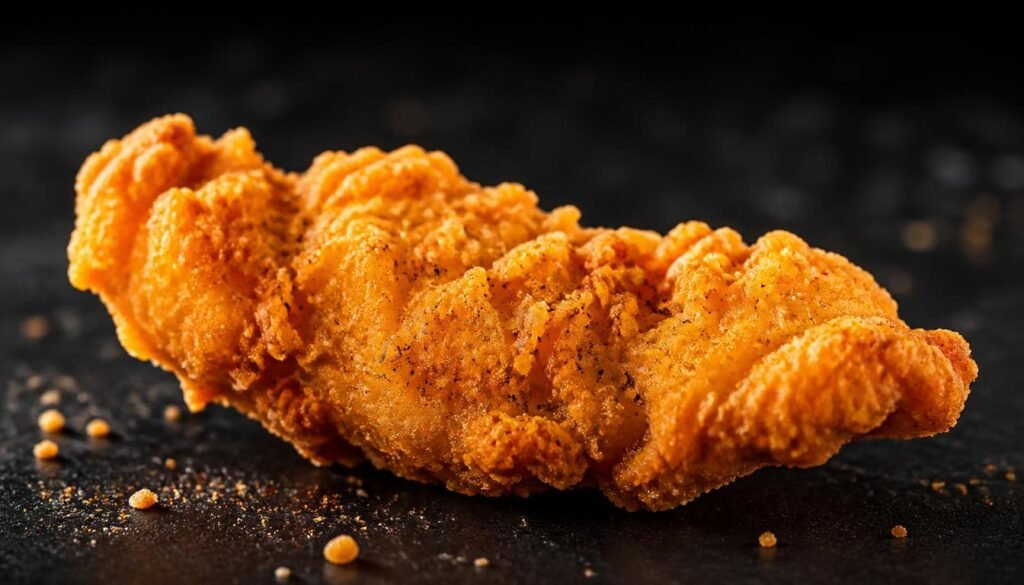
Texture is where crispy Hash Browns earn their reputation. A potato can be boiled, mashed, baked, roasted, fried, or shredded, and each treatment creates a completely different eating experience.
Hash browns sit in that lovely middle ground where the potato is still unmistakably soft and comforting, but the surface has been pushed into crisp territory.
Think of the outside as the noisy part of the food. It cracks and snaps when you bite through it. The inside, meanwhile, is comparatively quiet soft, warm and potato-like.
That contrast gives a relatively small serving more personality than you might expect from something made primarily around a humble vegetable.
This is also why reheated hash browns can feel disappointing. Crispness is fragile. Steam, time and packaging can soften a toasted exterior, so a freshly prepared patty has an advantage that is difficult to fake later. It’s a tiny lesson in breakfast physics, more or less.
McDonald’s Hash Browns Calories and Nutrition
One of the most common questions people ask is, how many calories are in McDonald’s Hash Browns? According to McDonald’s U.S. product information, one serving contains 140 calories.
McDonald’s explains that its nutrition information is based on standard product formulations and serving sizes, with values rounded according to applicable U.S. FDA NLEA rules.
That number is useful, but calories are only one part of the picture. When considering McDonald’s Hash Browns nutrition, it can help to look at the complete nutrition summary rather than treating one number as the entire story.
The company’s online nutrition calculator allows customers to examine calories, carbohydrates, protein and other nutritional information for menu products.
A 140-calorie side can fit very differently into different breakfasts depending on what accompanies it.
A hash brown with coffee is one situation; a full breakfast containing a sandwich, additional sides and a sweetened drink is another. Food has a habit of arriving in combinations, not little isolated mathematical boxes.
It is also worth remembering that nutrition values can vary. McDonald’s notes that serving sizes, preparation techniques, ingredient sources, regional or seasonal differences, and product formulation changes may affect nutrient content.
So the most dependable approach is to check the current official information when precise dietary tracking matters.
Hash Browns Ingredients: What Goes Into the Patty?
The question of Hash Browns ingredients is more complicated than simply saying “potatoes.”
Potatoes are the central food ingredient, but a commercial prepared product involves a formulation designed to produce a consistent shape, texture and cooking result.
McDonald’s provides ingredient and allergen information through its U.S. website and app, allowing customers to examine product-specific details.
The company says its nutrition information comes from accredited laboratory testing, published resources and information supplied by McDonald’s suppliers.
That distinction matters because the phrase McDonald’s ingredients refers to more than what a person can visually identify on the finished food.
A crispy potato patty has gone through preparation, shaping and cooking processes before it reaches the breakfast bag. And no, the potato did not simply wake up one morning already shaped like a rectangle.
For readers interested in a hash brown recipe, homemade versions can be made from shredded potatoes, seasoning and cooking oil, but a homemade recipe should not automatically be treated as an exact recreation of the restaurant formulation.
Commercial food production depends on controlled ingredients, processes and equipment that are difficult to duplicate perfectly in a home kitchen.
The Role of Shredded Potato
The phrase shredded potato hash browns sounds almost too ordinary to explain such a recognizable breakfast item, but shredding is important.
Smaller potato pieces create more surface area, and surface area is where browning and crisping get interesting.
Imagine a whole potato trying to become crispy. It has a hard time doing so without becoming overcooked in other places.
Shredded potatoes, however, can be distributed into a thin patty, allowing the exterior to develop that browned texture while the interior retains some softness.
That is why crispy outside and fluffy inside are more than advertising language. They describe the sensory contrast people usually expect from a good hash brown.
If everything were crisp, the patty would be hard and dry; if everything were soft, it would lose the characteristic hash brown experience.
The potato, humble as ever, is doing quite a lot of work here.
Hash Browns on the McDonald’s Breakfast Menu
Breakfast at McDonald’s has a particular rhythm. There are sandwiches, biscuits, burritos, coffee, and then the small golden potato side that seems to quietly attach itself to almost everything.
Depending on the market and current menu, familiar breakfast companions include the Egg McMuffin®, Sausage McMuffin®, Sausage McMuffin® with Egg, Sausage Biscuit, and Sausage Burrito.
McDonald’s current U.S. Hash Browns page also highlights the Under $3 Menu and McValue® menu, though availability, pricing and participation can vary by restaurant.
There is a reason the potato patty works so well beside breakfast sandwiches. Sandwiches often bring bread, egg, cheese or meat, while the hash brown contributes a distinctly potato-based crispness. It changes the texture of the meal rather than simply repeating it.
And then there is coffee. A hot Premium Roast Coffee and a crispy potato patty may not sound like a grand culinary partnership, but breakfast does not always need grandness. Sometimes warm coffee, salty potatoes and a quiet morning are plenty.
McDonald’s Hash Browns and the Question of Value
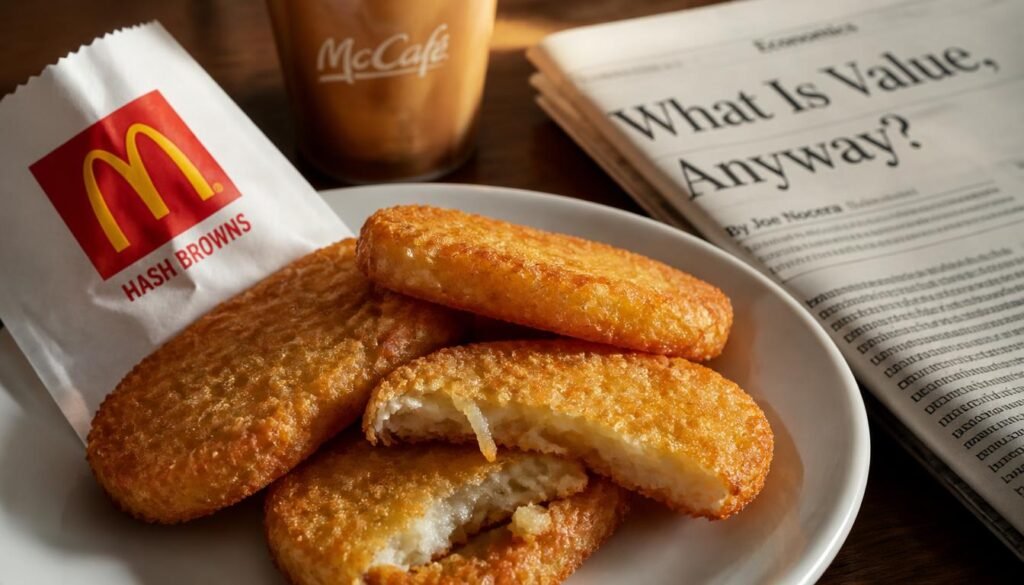
People searching for Hash Browns under $3, the McValue menu, or the current Under $3 Menu should remember that restaurant prices are not universal. McDonald’s states on its product page that prices and participation may vary.
That means an old screenshot, social media post or memory from three years ago may not tell you what your nearby restaurant charges today.
Menus change, promotions change, and regional pricing can change too. Breakfast has apparently joined the modern world, where yesterday’s price is sometimes just a historical artifact.
For the most accurate price, checking the current menu for the specific restaurant is better than relying on a generic price list.
How to Order McDonald’s Hash Browns
If you want to order Hash Browns, there are several practical routes. You can order at the restaurant, use the drive-thru, or, where available, use the McDonald’s app for mobile ordering and pickup.
McDonald’s says customers can order Hash Browns from the full menu in the app for pickup, with Mobile Order & Pay available at participating restaurants.
The app can also be useful when you want to check nutrition information before completing an order.
McDonald’s explains that users can navigate to nutrition information and view a product’s nutrition and ingredient details; the company also says these details can be accessed from an item during mobile ordering when available.
That little step can save some uncertainty, especially if you’re counting calories, comparing breakfast items, or checking ingredients before ordering. It takes less time than wondering about it while you’re already standing at the counter, which is a small victory.
McDonald’s Hash Browns and Food Allergies
This is the section where convenience should take a back seat to caution. People with food allergies or special dietary needs should check the current official allergen information before ordering.
McDonald’s identifies nine major allergens covered in its U.S. allergen information: eggs, dairy, wheat, soy, peanuts, tree nuts, fish, shellfish and sesame.
The company also warns that normal kitchen operations can involve shared cooking and preparation areas, equipment and utensils, creating the possibility of cross-contact with other food products.
This is important because an ingredient list alone does not necessarily tell the whole food-safety story for someone with a serious allergy.
Cross-contact, shared cooking equipment and shared preparation areas can matter even when an allergen is not an obvious component of the finished item.
McDonald’s also states that it does not certify its U.S. menu items as Halal, Kosher, vegetarian, vegan or gluten-free.
Customers with specific religious, ethical or medical dietary requirements should therefore consult the current product information and, where appropriate, a qualified healthcare professional.
Ingredient information can change, too. That means an old blog post claiming a product is “definitely” suitable for a particular diet should not outrank current restaurant information. Your health is not a good place for internet archaeology.
Are McDonald’s Hash Browns Vegetarian, Vegan or Gluten-Free?
These labels deserve careful handling because “I don’t see meat in it” is not the same as an official dietary certification.
McDonald’s U.S. says it does not promote its menu items as vegetarian, vegan or gluten-free, and it does not certify menu items as gluten-free. It also notes the possibility of shared cooking and preparation areas and equipment.
So if you have a dietary preference rather than a medically necessary restriction, you may decide differently from someone who has a diagnosed allergy or severe intolerance.
But if gluten, dairy, soy or another allergen presents a serious health concern, do not make assumptions based solely on the appearance of a potato patty.
The safest habit is boring but useful: check the current allergen information, check the ingredient statement, and ask the restaurant if you still have a concern. Boring advice, maybe, but boring is underrated when food allergies are involved.
What Makes Hash Browns Different From Homemade Ones?
Homemade potato hash browns have a wonderful unpredictability. One morning they might be perfectly golden, and the next they come out looking like they have survived a minor kitchen argument.
Restaurant hash browns are different because consistency is part of the product. The goal is for a customer in one location to have an experience reasonably similar to a customer somewhere else, even though real-world preparation naturally introduces some variation.
At home, you might shred a potato, squeeze out moisture, season it aggressively and fry it in a skillet. You control almost everything.
With a commercial product, the formulation and preparation are designed around repeatability, speed and food-service requirements.
Neither approach is automatically “better.” They are simply different experiences. Homemade hash browns can feel personal and rustic; McDonald’s hash brown patties are built around convenience and recognizability.
Why People Keep Coming Back to Them

There are foods that impress you and foods that simply make sense. Hash browns are often the second kind.
They are warm. They are crispy. They are salty. They are small enough to add to a meal without making the decision feel enormous.
And they have a shape that somehow makes eating shredded potatoes with your fingers feel completely reasonable.
There is also a memory element. For some people, a McDonald’s breakfast recalls road trips, school mornings, airport runs, early shifts or a parent bringing home breakfast in a paper bag.
The food itself is only part of the experience; the circumstances around it become attached to the taste.
That may explain why a little potato patty can inspire stronger loyalty than its ingredient list would suggest. Food doesn’t always stay inside the mouth. Sometimes it wanders into memory and sets up furniture there.
A Quick Look at Common Breakfast Pairings
If you are building a McDonald’s breakfast around Hash Browns, the pairing can change the entire feel of the meal.
- Egg McMuffin® + Hash Browns: A classic combination, with the sandwich bringing egg, cheese and an English muffin while the potato adds crunch.
- Sausage McMuffin® + Hash Browns: A richer, savory pairing where the crispy potato cuts through the softer sandwich texture.
- Sausage Burrito + Hash Browns: A particularly interesting contrast because the burrito is soft and wrapped while the hash brown is crisp and compact.
- Sausage Biscuit + Hash Browns: A heavier, biscuit-centered breakfast where the potato adds another crisp element.
- Premium Roast Coffee + Hash Browns: Less of a full meal and more of a small breakfast moment, especially when you want something savory with your coffee.
The best pairing is, honestly, whichever one makes sense for your appetite that morning. Breakfast does not require a committee meeting.
Understanding Nutrition Information Without Overthinking It
Nutrition labels can sometimes turn breakfast into an accounting exercise, but they are meant to help you make informed choices, not make you afraid of food.
The McDonald’s nutrition calculator provides information about calories, carbohydrates, protein and other nutrients across its menu. McDonald’s says Percent Daily Values are based on a 2,000-calorie diet, while individual needs can be higher or lower.
That last part matters. A single number cannot tell you what a food means for every person. Someone training for a long-distance event, someone eating a light breakfast, and someone following a medically prescribed diet will have very different nutritional contexts.
So when looking at Hash Browns nutrition facts, consider the whole meal, your own dietary needs and the portion you’re actually eating. A number is information; it is not a moral judgment.
Frequently Asked questions
mcdonalds hashbrown calories
A McDonald’s Hash Brown contains 140 calories. It is a crispy and toasted potato patty that is commonly served as a breakfast side.
mcdonald’s hash brown
McDonald’s Hash Brown is made with shredded potatoes and prepared to be crispy and golden on the outside and fluffy inside. It is a popular breakfast menu item.
mcdonalds hashbrown
McDonald’s Hash Brown is a crispy shredded-potato patty served as part of the breakfast menu. It contains 140 calories per serving.
hash brown mcdonald’s
The McDonald’s Hash Brown is a crispy potato breakfast item with a fluffy interior and toasted exterior. It can be ordered through the McDonald’s menu or app.
mcdonalds hashbrown price
The price of a McDonald’s Hash Brown can vary depending on the location and menu. It may also be available through value offers such as the Under $3 Menu.
Read this Blog: https://menupricesaustralia.com/mcchicken/
Final Thoughts on McDonald’s Hash Browns
McDonald’s Hash Browns have achieved something that sounds easy until you try to explain it: they turned shredded potatoes into a small, portable breakfast ritual.
Their appeal comes largely from contrast the crispy texture, the toasted exterior, the softer potato interior, and the way the patty fits beside nearly every familiar breakfast item.
The current McDonald’s U.S. product page lists Hash Browns at 140 calories and describes them as shredded potato patties with a crispy, toasted exterior and fluffy interior.
For customers watching their intake, the company’s nutrition calculator and ingredient information provide a better source than random nutrition posts floating around online.
For anyone with food allergies or particular dietary requirements, the important lesson is even simpler: check the current allergen and ingredient information, and remember that shared preparation areas and equipment can create cross-contact concerns.
McDonald’s itself advises customers with allergies or special dietary needs to review current information and consult a doctor for diet-related questions.
In the end, a hash brown is still just a potato patty. But food has a funny habit of becoming more than its ingredients. Sometimes it is the crunch you wanted on a sleepy morning.
Sometimes it is the thing you order automatically because breakfast feels incomplete without it. And sometimes, yes, it is just a crispy little potato rectangle that mysteriously vanishes before you have even finished your coffee.
For current nutrition, ingredients, allergen details and ordering information, the best place to check is McDonald’s official Hash Browns page and McDonald’s Nutrition Calculator. Those sources are especially useful because menu formulations and information can change over time.


