

Hash Browns: The Crispy Little Breakfast Habit I Somehow Keep Coming Back To
There are foods you eat because you’re hungry, and then there are foods that seem to know exactly what kind of morning you’re having. For me, Hash Browns belong firmly in the second group.
They are not grand. They don’t arrive with the drama of a towering breakfast sandwich or a plate trying very hard to look healthy.
It’s just a small, golden potato thing, quietly sitting in its paper sleeve, waiting to be bitten. And somehow, that little rectangle can turn an ordinary morning into a morning worth remembering.
My first real appreciation for a McDonald’s hash brown came on one of those rushed mornings when breakfast was almost an afterthought.
I had places to be, a coffee that was already getting cold, and the particular sort of hunger that makes every smell from a restaurant kitchen seem personally directed at you.
Then came the crisp. That first bite made the decision for me. The outside was toasty and crunchy, while the inside had that softer potato texture which, honestly, is hard to argue with.
Over time, I became curious about what was actually inside the thing I was enjoying so casually. How many hash brown calories are there? What does the serving size mean?
Is the crispiness mostly potato, oil, or some mysterious breakfast alchemy? And what about total fat, carbohydrates, protein, sodium, and the other numbers that sit behind the taste?
That curiosity turned my occasional breakfast treat into a small food investigation, and it also taught me something useful: enjoying food and understanding food are not enemies. You can do both, which is rather nice.
| Key Detail | Hash Browns |
|---|---|
| Type | Breakfast side |
| Main Ingredient | Potato |
| Texture | Crispy outside, soft inside |
| Taste | Savory and toasty |
| Serving Size | 57 g* |
| Energy | 173 kcal* |
| Total Fat | 11 g* |
| Carbohydrates | 17 g* |
| Protein | 2 g* |
Why Hash Browns Feel Like More Than a Side Dish
A hash brown is technically a breakfast side item, but calling it “just a side” feels a little unfair. In the world of McDonald’s breakfast, the hash brown has developed its own tiny personality. It’s crispy, salty, warm, potato-heavy and wonderfully uncomplicated, which may be exactly why people remember it.
The basic idea is wonderfully old-fashioned. Shredded potato is shaped into a patty and cooked until the exterior becomes crisp.
McDonald’s describes its U.S. Hash Browns as shredded potato patties that are fluffy inside and crispy and toasty outside.
There’s no need for a culinary speech before eating it. You pick it up, take a bite, and the potato does the talking.
I think that simplicity is part of the emotional appeal. Breakfast can be a rushed meal, especially when you’re leaving for work, dropping children somewhere, catching a bus,
or simply trying to convince yourself that getting out of bed was a good decision. A crispy hash brown asks almost nothing from you. It is ready. It is warm. It crunches.
And yes, sometimes that is enough.
Hash Browns and McDonald’s: My Little Breakfast Ritual
My own habit became slightly ridiculous after a while. I would tell myself I was stopping at McDonald’s because I needed coffee, then somehow a hash brown would appear beside it. This happened so often that eventually I stopped pretending the potato was an accident.
There is something about eating one while travelling that makes the experience different. At home, a potato is breakfast. In a restaurant, somehow it becomes a little event.
You sit in a car, hear the wrapper crackle, smell the fried exterior, and think, “Well, this morning has improved.” Maybe that sounds overly sentimental for a potato, but food memories are rarely sensible things.
The other reason I like McDonald’s Hash Browns is their texture. A lot of potato dishes are either soft all the way through or crunchy all the way through.
A good hash brown has a conversation between the two. The exterior says crunch, while the interior quietly says potato. They somehow agree to disagree.
Of course, taste is personal. One person’s perfect crispy hash brown is another person’s “please give me something softer.” That’s the funny thing about food. There is no committee meeting that decides what your mouth should enjoy.
Hash Browns Nutrition: What Is Actually in One?
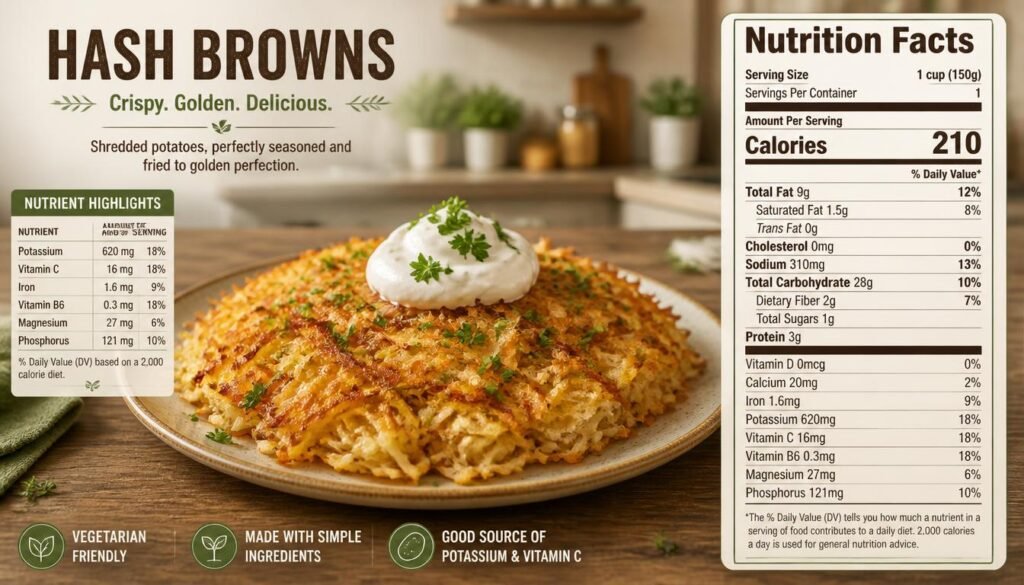
Here is where the story gets more practical.
The hash brown nutritional information supplied for this article lists a 57 g serving size with 173 kcal of energy. It also lists 11 g total fat, 17 g carbohydrate, and 2 g protein.
The same figures give 1 g saturated fat, 0 g trans fat, 1 mg cholesterol, 304 mg sodium, 3 g dietary fibre, and 0.3 g sugars.
The listed micronutrients are modest: 0 µg vitamin A, 0 mg vitamin C, 9 mg calcium, and 1 mg iron. Those numbers help paint a more complete picture because nutrition is never just about calories. A food can fit into a meal for several reasons, and a single nutrient rarely tells the whole story.
There is one important catch, though, and it’s a pretty big one when writing about branded food: nutritional numbers can vary by country and formulation.
McDonald’s current U.S. website, for example, lists its Hash Browns at 140 calories, not 173, and explains that nutrition information is based on standard formulations and serving sizes and can vary with preparation, supply, regional differences, seasonal differences, and formulation changes.
So if you see 173 kcal on one source and another McDonald’s market lists a different number, it doesn’t automatically mean somebody made a mistake.
It may simply be a different market, recipe, serving specification, or updated product information. Food labels are not carved into stone, thankfully.
McDonald’s Hash Browns Calories: Why the Number Matters
When people search for McDonald’s hash browns calories, they usually want a very simple answer. “How many calories am I eating?”
That’s a reasonable question, but calories are better understood as part of the whole meal rather than treated like a moral score.
The supplied nutritional profile gives 173 kcal for the 57 g serving, while the current U.S. product page gives 140 calories for its standard Hash Browns. Either way, a hash brown is a relatively small item compared with a full breakfast meal.
For perspective, McDonald’s itself says that its displayed Daily Values (DV) are based on a 2,000-calorie diet. It also notes that individual calorie needs may be higher or lower.
That distinction matters because “2000 calories” is a reference point, not a magical number that applies identically to every human being.
I find this more helpful than obsessing over whether a breakfast side is “good” or “bad.” If I’m having a hash brown with coffee one morning, I know it contributes energy, carbohydrates and fat.
If I’m eating a much larger breakfast, I can look at the complete meal and decide what makes sense for me. The number becomes information instead of a tiny judge sitting on my shoulder.
Hash Brown Fat, Carbohydrates and Protein
The supplied McDonald’s hash browns nutrition figures show 11 g total fat, 17 g carbohydrates, and 2 g protein per 57 g serving. Those three numbers are probably the quickest way to understand the macronutrient shape of the food.
The fat helps explain part of the satisfying mouthfeel. Fried foods have a particular richness that steamed or boiled potatoes simply don’t imitate.
The carbohydrate content comes mainly from the potato-based nature of the item, while the protein figure is quite small. So if I were building a breakfast around a hash brown, I wouldn’t expect the hash brown itself to carry the protein burden of the meal.
That’s actually a useful way of thinking about breakfast sides. A crispy potato patty can be the thing that makes breakfast enjoyable without needing to be the entire nutritional strategy. Pairing foods can create a more substantial meal than asking one small item to do everything.
The supplied figures also list 1 g saturated fat and 0 g trans fat, along with 1 mg cholesterol. These values are product-specific and should be checked against the current information for the McDonald’s market where you are buying the food, rather than copied blindly from an old nutrition page.
Sodium, Fibre and the Less-Obvious Numbers
The number that surprised me more than I expected was the listed 304 mg sodium per serving. Sodium is easy to overlook when you’re concentrating on crunch, because nobody bites into a hash brown and announces, “Ah yes, excellent sodium profile.”
But it matters when looking at the whole meal. If the rest of breakfast includes other salty foods, the combined amount can climb considerably.
That doesn’t make the hash brown forbidden territory; it simply means sodium is one of those details worth noticing, particularly for people who have specific dietary needs.
The supplied nutrition profile also gives 3 g dietary fibre and 0.3 g sugars. Again, those numbers are useful because they prevent the nutrition conversation from becoming nothing more than “calories and fat.”
For anyone tracking their food carefully, the best habit is to look at the complete nutrition panel rather than choosing one attractive number. Calories, fat, carbohydrates, protein, fibre, sodium, vitamins and minerals all tell different parts of the story. Food is annoyingly complicated like that.
Hash Brown Ingredients: What Creates That Crisp Texture?
The supplied keyword set mentions a vegetable oil blend, citric acid, and dimethylpolysiloxane, alongside potato-based ingredients and processing details.
Exact ingredients should always be checked against the official ingredient disclosure for the relevant country, because McDonald’s formulations are not necessarily identical everywhere.
That last point is worth underlining. A person searching for hash brown ingredients may find a list from the United States, United Kingdom, Canada, or another market and assume it applies universally.
It might not. McDonald’s says its nutrition information can vary according to regional differences, supply sources, preparation and product formulation.
The oil is particularly relevant because frying changes the texture dramatically. Potato goes from soft and starchy to golden and crisp, and suddenly a humble vegetable has become the loudest part of breakfast.
I like that transformation. There is something almost theatrical about it, although it happens in seconds and nobody applauds.
Allergens and Food Sensitivities: The Part You Shouldn’t Guess
This is where personal food stories need to step aside and let careful information take over.
People with food allergies, intolerances, or other special dietary needs should not rely on a generic internet article when deciding whether a particular McDonald’s item is safe for them.
McDonald’s provides ingredient and allergen information, but also warns that normal kitchen operations can involve shared preparation areas, equipment and utensils, meaning cross-contact with other foods can be possible.
That distinction between an ingredient and cross-contact is important. Something might not intentionally contain a particular allergen while still being prepared in an environment where contact can occur. For someone with a serious allergy, “probably fine” is not a sensible food-safety policy.
The company’s U.S. nutrition information specifically discusses the nine major allergens recognized by the FDA, while other countries use their own regulatory allergen lists. So check the official local information, especially if you are travelling.
My rule is simple: curiosity is wonderful, guessing is not.
How the Nutrition Calculator Changes the Way I Order
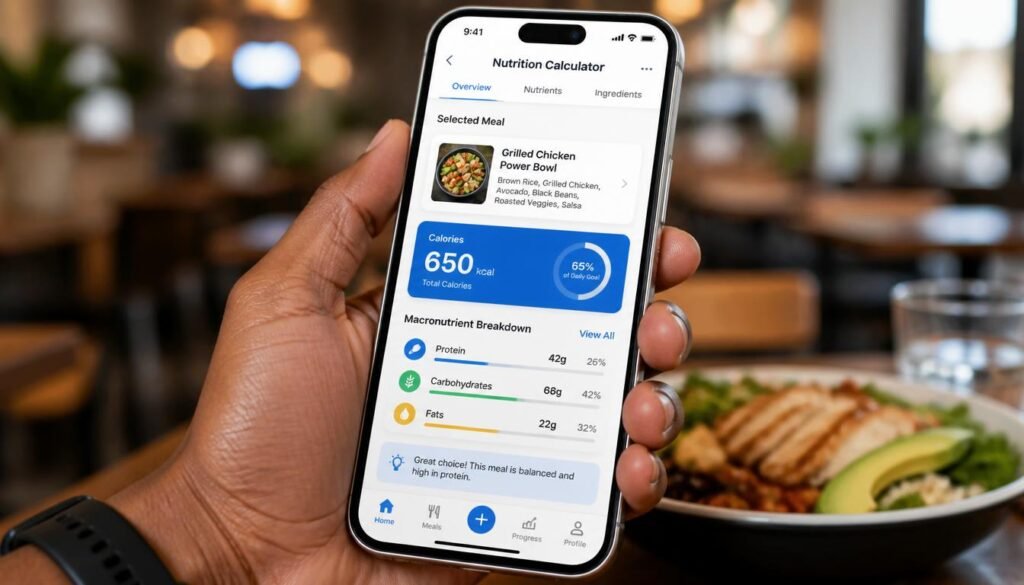
One thing I appreciate about modern restaurant menus is the ability to investigate before ordering.
McDonald’s provides a Nutrition Calculator designed to show calories, carbohydrates, protein and other nutrition information for its products.
That tool is more useful than it sounds. Instead of wondering whether adding a hash brown to breakfast changes the meal dramatically, you can look at the entire order.
A coffee, breakfast sandwich, hash brown and extras can be considered together instead of as isolated foods.
It also gives you a way to compare. Maybe today I want the crispy potato side. Tomorrow I might want something else. The point isn’t to turn breakfast into an accounting exam; it’s simply to make the choice with your eyes open.
I have found that knowing what I’m eating actually makes the food more enjoyable, oddly enough. There is less guilt attached to something when I’m not pretending I don’t know what it is.
A Few Hash Browns Memories That Nutrition Facts Cannot Explain
Nutrition information can tell me that a hash brown contains a certain number of calories, grams of fat and carbohydrates. It cannot tell me why I remember eating one at a roadside restaurant while watching rain blur the windows.
It cannot record the friend who stole half of mine and then insisted that “half” meant taking the larger half. It cannot explain why breakfast tastes different when you are travelling.
Nor can it calculate the emotional value of being handed a warm paper bag when you have been awake since an unreasonable hour.
That is why food stories matter.
We sometimes talk about nutrition as though food is merely a collection of numbers wearing a wrapper. Numbers are important, certainly, but people eat meals in real lives.
They eat before exams, after night shifts, during road trips, after hospital visits, during celebrations, on lonely mornings and on mornings when everything feels hopeful.
A hash brown can be nutritionally described in a table. The memory of eating it belongs somewhere else.
Hash Browns Compared With a Full Breakfast
A breakfast side makes the most sense when you remember that it is a side. McDonald’s breakfast menus can include sandwiches,
hotcakes, breakfast platters, coffee and other combinations, and the nutritional impact of the whole order can be much larger than that of the hash brown alone.
For example, McDonald’s current U.S. site lists its Bacon, Egg & Cheese Bagel Meal with a small Premium Roast Coffee and Hash Browns at 735 calories.
That is a useful reminder that “I only had one hash brown” tells you very little about the nutrition of the entire breakfast.
The reverse is also true. If someone has a hash brown alongside a lighter breakfast, the overall meal looks very different.
This is why I prefer thinking in terms of meals rather than individual foods. A single item rarely deserves either a halo or a warning siren.
My Personal Rule for Enjoying a Crispy Hash Brown
I don’t try to make every breakfast perfect anymore. Perfect breakfasts are exhausting, and frankly they sound suspicious.
Instead, I try to make choices consciously. If I want a crispy hash brown, I eat the hash brown. I pay attention to the rest of the meal, consider my appetite, and move on with my day.
Sometimes I pair it with a more protein-rich breakfast. Sometimes it really is just coffee and a potato patty because that is what the morning allows.
That approach feels more realistic than treating one menu item as though it will determine my entire diet.
And there is another small trick: eat it while it is hot. This is not a scientific recommendation, obviously, but it is perhaps the most reliable hash brown advice I can offer.
The difference between “fresh and crispy” and “I forgot this in the bag for forty minutes” is a dramatic little tragedy.
What to Check Before Ordering
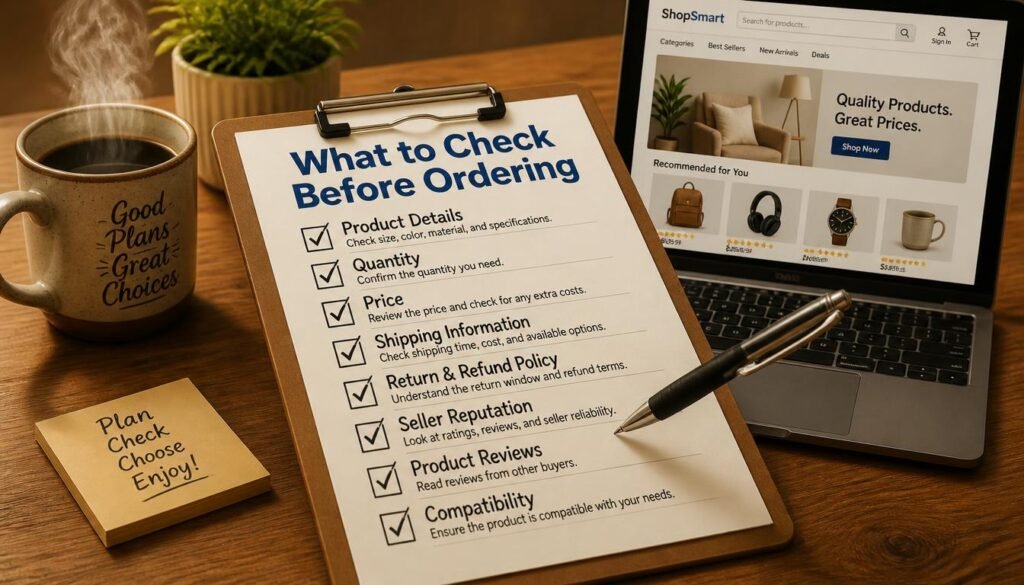
If you want reliable hash browns nutritional information, especially because you are tracking your diet, take a few seconds to check the current local McDonald’s information.
Look at the serving size, because numbers only make sense when you know what quantity they describe. Then check calories, total fat, saturated fat, carbohydrates, protein, fibre and sodium.
If you have specific dietary concerns, continue to the ingredients and allergen information, rather than stopping at the calorie figure.
McDonald’s says its nutrition information comes from testing, published resources and information supplied by food suppliers, and notes that product formulations and preparation can change.
That makes the official nutrition page or Nutrition Calculator a better source than a random old social-media post.
And if your diet is medically restricted, speak with an appropriately qualified healthcare professional about what is suitable for you. A search engine is not your doctor, no matter how confidently it writes in bold letters.
Frequently Asked questions
hash brown mcdonald’s
McDonald’s Hash Brown is a crispy, golden potato breakfast side that is crunchy on the outside and soft inside. It’s a simple but popular choice for a quick morning meal.
mcdonald’s hash brown
A McDonald’s Hash Brown is made from shredded potatoes and cooked until beautifully crispy. It pairs nicely with coffee, breakfast sandwiches, or can be enjoyed on its own.
hash brown calories
Hash brown calories can vary by brand, serving size, and location. Always check the latest nutritional information for the most accurate calorie count.
mcdonald’s hash brown calories
McDonald’s Hash Brown calories may differ depending on the country and product formulation. The current nutrition information for your local McDonald’s is the best source to check before ordering.
hash brown mcdonalds
Hash Brown McDonald’s is a convenient breakfast side for anyone who enjoys crispy and savory potato food. Its golden texture makes it a small item that can make breakfast feel a little more satisfying.
Read this blog: https://menupricesaustralia.com/mccafe-french-vanilla-cappuccino/
The Final Bite
I started with a simple question about Hash Browns and ended up somewhere I didn’t quite expect: thinking about how food sits between pleasure, habit, memory and information.
The numbers matter. A supplied 57 g serving profile lists 173 kcal, 11 g total fat, 17 g carbohydrates, 2 g protein, 304 mg sodium, 3 g dietary fibre, and several smaller amounts of vitamins and minerals.
But current McDonald’s information can differ by market; its U.S. site currently lists 140 calories for its Hash Browns and explicitly warns that nutrition can vary with formulation, preparation, supply and region.
So the most useful answer to “how many calories are in McDonald’s hash browns?” is not just one number shouted into the internet. It is: check the current information for your location and serving, then put that number into the context of your whole meal.
As for me, I’ll probably still order one now and then.
Because sometimes breakfast is about nutrition, sometimes it is about convenience, and sometimes it is about that first ridiculous little crunch on a rainy morning when you needed something warm and familiar. The trick is not pretending food is only one of those things.
A hash brown can be a potato-based breakfast item, a source of calories and carbohydrates, a fried menu side, and a strangely persistent memory all at once.
And maybe that’s why I keep coming back to it. Not because a tiny rectangle of potato has solved breakfast forever, but because every once in a while, simple food gets the morning exactly right.


